You can do exercise for physical fitness components that will help you to gain optimal health. Being optimally fit involves more than just weightlifting or spin class. There are five components to total fitness and doing exercise for physical fitness components for each will result in optimal health.
1. Cardiovascular & Respiratory Endurance
How long can you sustain moderate physical activity such as jogging, brisk walking or other sports? This is directly related to your cardiovascular and respiratory endurance. Endurance is important because it allows you to participate in the activities you enjoy without becoming exhausted.
2. Muscular Strength
How easily can you lift heavy objects? Can you open jars or do you need someone to do it for you? How about moving furniture when you decide to clean under it or rearrange your living room? These activities are all made easier by maximizing your muscular strength. The good news is that you can gain muscle strength without growing big, bulging muscles. Adding muscle also has an added benefit - increased muscle mass causes a metabolic increase, as well.
3. Muscular Endurance
Muscular endurance is different than muscular strength. Endurance allows repetitive motion over sustained amounts of time.
4. Flexibility
Can you bend over and tie your shoes or do you get stuck somewhere along the way? How well can you reach that book that fell under the bed? These are both activities affected by your flexibility. Flexibility comes from supple muscle and connective tissue that stretches easily, allowing you to perform motions like bending, reaching and twisting over a full range of motion.
5. Body Composition
Your body is made up of lean body mass and fat. Lean body mass is everything in your body that is not fat, such as muscle, skin, organs and bone. A healthy body composition is important for prevention of diseases such as coronary disease, diabetes and high blood pressure.
Exercise for Physical Fitness Components
There are exercises you can do for each. Some exercises help you hit more than one component at a time. Here are some exercises that will help you to work on each of your components of fitness.
- Interval training is a great form of exercise, because it hits a number of the physical fitness components at once. Interval training improves muscular strength and endurance, cardiorespiratory endurance and body composition. Interval training involves rapid cycling of high intensity exercise - such as weightlifting - and lower intensity aerobic training - such as a stair climber - in cycles.
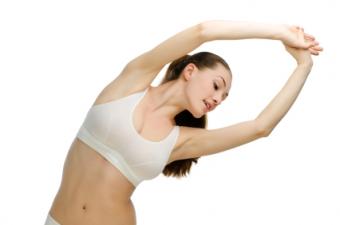
- Stretching exercises can help improve your flexibility and prevent injury.
- Weight training improves both muscle strength and muscle endurance. If you get a set of simple dumbbells, you can do these types of exercises at home.
- Calisthenics can improve muscle and cardiovascular endurance. If you do them very slowly, using about 20 seconds to go through the entire range of motion for each exercise, you can also improve your muscular strength. Best of all, calisthenics require no special equipment and can be done any time, any place.
- Sports, such as tennis, soccer and racquetball are a form of extremely fun interval training. Any sport that intersperses bursts of speed and power with lower levels of running, walking and jogging can help to improve strength, endurance and cardiovascular health. This also has a positive effect on your body composition.
- Aerobic exercise such as jogging, elliptical trainer or spin class increases cardiovascular and respiratory endurance. To some extent, they also improve muscular endurance.
- Yoga can improve flexibility and, depending on the type of yoga you do, it can also improve muscular strength, muscular endurance, cardiorespiratory endurance and body composition.
- Pilates is another super exercise that can affect all of the components of physical fitness.
- Walking improves cardiorespiratory endurace.
Recommendations for Exercise
- For optimal health, you should do some form of exercise most days of the week.
- Select exercises from the above list - or other exercises you might choose - that cover all of the components of fitness.
- Choose exercises that you enjoy and will stick with. If you mix it up, choosing a variety of exercises, your body will reap maximum benefits while you stay interested and engaged in building fitness.
- Always warm up before exercising and cool down after exercising.
- Stretch when you are done exercising. This is the ideal time to increase your flexibility, because your muscles are warm and more pliable. Stretching following exercise also keeps you from stiffening up when you are done.
Physical fitness is important for quality of life and for your health. By performing exercises that cover all of the components of physical fitness, you can lead a healthier, happier life.


